
Math, Time and Spirituality in Einstein's Dreams
In his novel Einstein's Dreams, Alan Lightman describes time as an absolute:
"Time is the reference against which all actions are judged. Time is clarity for seeing right and wrong" (35).
Time is awarded a divine status because of its ability to exist as a standard against which everything is measured.
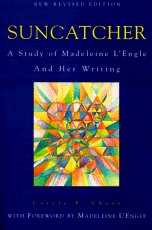
This reference compares with Madeleine L'Engle's concept of math and spirituality. L'Engle sees math as an absolute, perfect science which reflects God's own perfection. The book Suncatcher: A Study of Madeleine L'Engle and Her Writing by Carole F. Chase describes L'Engle's views on math and spirituality. For L'Engle, the perfection and order of math provides evidence of the perfection and order of God. The detailed structure of the universe is evidence of a higher intelligence at work.
Check out the interactive dream of time as absolute. Go to "the clock"
How does it all relate?
The philosophical issues in Einstein's Dreams deal with the concepts of spirituality. The perfection expressed in mathmatics can be understood as evidence of a creator. The aesthetics of mathematics lends itself to ideas about philosophy and the structure of the universe according to string theory.